Robiul Hossen

Mechanical Engineer | Materials Researcher | Prospective PhD Student


I'm a mechanical engineer working in advanced materials, with a focus on nanoparticle-reinforced composites, nanomaterials, and the structure–property relationships that decide how a material performs under real conditions. My research combines experimental characterization, including SEM, FTIR, XRD, and thermal and mechanical testing, with finite element modeling. This work has been published in Scientific Reports, the Arabian Journal for Science and Engineering and Results in Engineering, with ongoing studies on heteroatom-doped graphene and sustainable material recovery. I currently coordinate research and mentor students at NARP Lab, and I'm seeking a PhD position where I can work at the intersection of materials design, characterization, and modeling.

Research Interests


Lightweight Structures

Maximum strength at minimum weight for load-bearing designs.

FRC/FRP Materials

Understanding the fiber-matrix interface that decides strength and failure.

Advanced Materials

Engineering material structure to meet specific performance demands.

Structural Optimization

Cutting weight while holding stress, stability, and safety within limits.

Nanocomposites

How nanoscale reinforcement shapes bonding and bulk material strength.

Nanotechnology

Tailoring material properties through nanomaterials and graphene.

Sustainable Materials

Turning waste streams into reliable, load-bearing materials.

The Learning Curve

B.Sc. in Mechanical Engineering

2020 - 2024

City University, Dhaka, Bangladesh

CGPA: 3.27/4.00

Thesis on the effect of magnesium oxide on the mechanical behavior of jute fiber reinforced epoxy bio-nanocomposite, published in Scientific Reports (Springer Nature). Investigated how nanoparticle reinforcement affects interfacial bonding and mechanical performance through mechanical testing, FTIR, and SEM analysis.

Relevant Courswork


Mechanics of Solids | Fluid Mechanics | Engineering Thermodynamics | Heat Transfer | Machine Design | Metallic Materials | Application of CAD to Materials Processing | Computer Programming | Measurement and Instrumentation | Manufacturing Processes & Technology | Measurement Techniques and Quality Control
Academic Interruption

2021

COVID-19 University Closures

Worked remotely as a graphic designer at Formica, a German-based company, and taught graphic design at a leading brand design training institute. Completed self-directed CAD training in SolidWorks and AutoCAD in preparation for core engineering coursework, resuming studies in Spring 2022.

Diploma in Engineering

2014 - 2018

Cumilla Polytechnic Institute, Bangladesh

CGPA: 3.35/4.00

Built the foundation in engineering fundamentals and hands-on technical training. An early agricultural drone project first drew my attention to lightweight structures and the materials that make them possible.

Research Experience

  1. Nayem's Association for Research & Publication (NARP)

    Currently coordinate research and mentor Undergraduate students

    Advanced materials

    Germanium-assisted bandgap tailoring of multi-heteroatom-doped graphene

    Synthesized through electrochemical exfoliation of sintered fertiliser-derived precursors.

    • Explored how controlled heteroatom doping and germanium incorporation can tune the electronic bandgap of graphene.
    • Developed a low-cost, sustainable synthesis route using unconventional, fertiliser-derived precursor sources.
    • Connected nanoscale material design to functional semiconductor behavior, extending the work toward tunable functional materials.

    Structural Optimization

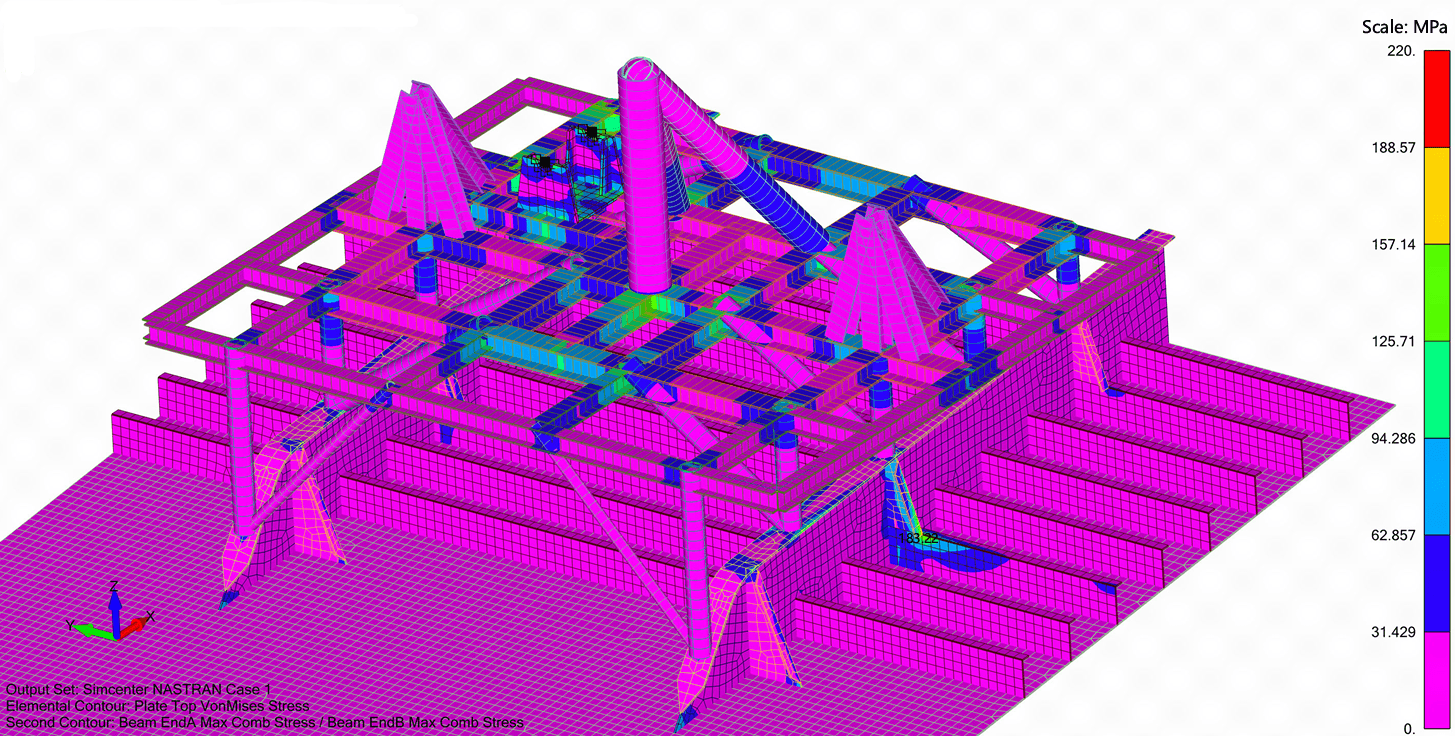
    FEA-based structural optimization of naval UNREP/RAS stations

    Weight reduction through genetic-algorithm optimization under load and stability constraints.

    • Applied genetic algorithms, surrogate modeling, and perturbation load analysis to optimize the station structure.
    • Achieved ~10% structural weight reduction while keeping peak von Mises stress within allowable limits.
    • Maintained SOLAS II-1 stability compliance throughout, published in the Arabian Journal for Science and Engineering.

    Sustainable materials

    Recycled denim–epoxy and jute–denim hybrid composites

    Turning textile waste into reliable, load-bearing composite material.

    • Fabricated recycled denim-epoxy and jute-denim hybrid fiber-reinforced composites from textile waste.
    • Conducted mechanical and thermal characterization (TGA/DSC) with SEM-based fracture-surface analysis.
    • Demonstrated waste-derived laminates as viable structural material, manuscript under review in Results in Engineering.
  2. Department of Mechanical Engineering, City University

    Worked as a Research Assistant

    Sustainable Materials

    Pyrometallurgical zinc recovery from galvanizing waste

    Recovering high-purity zinc from industrial byproduct waste.

    • Refined zinc from galvanizing waste to 99.54% purity via pyrometallurgical liquation refining.
    • Characterized phases and mechanical properties using XRF, XRD, OES, tensile, hardness, and impact testing.
    • Funded project (Bangladesh Machine Tools Factory, USD 2,000), Department of Mechanical Engineering, City University.

Publications

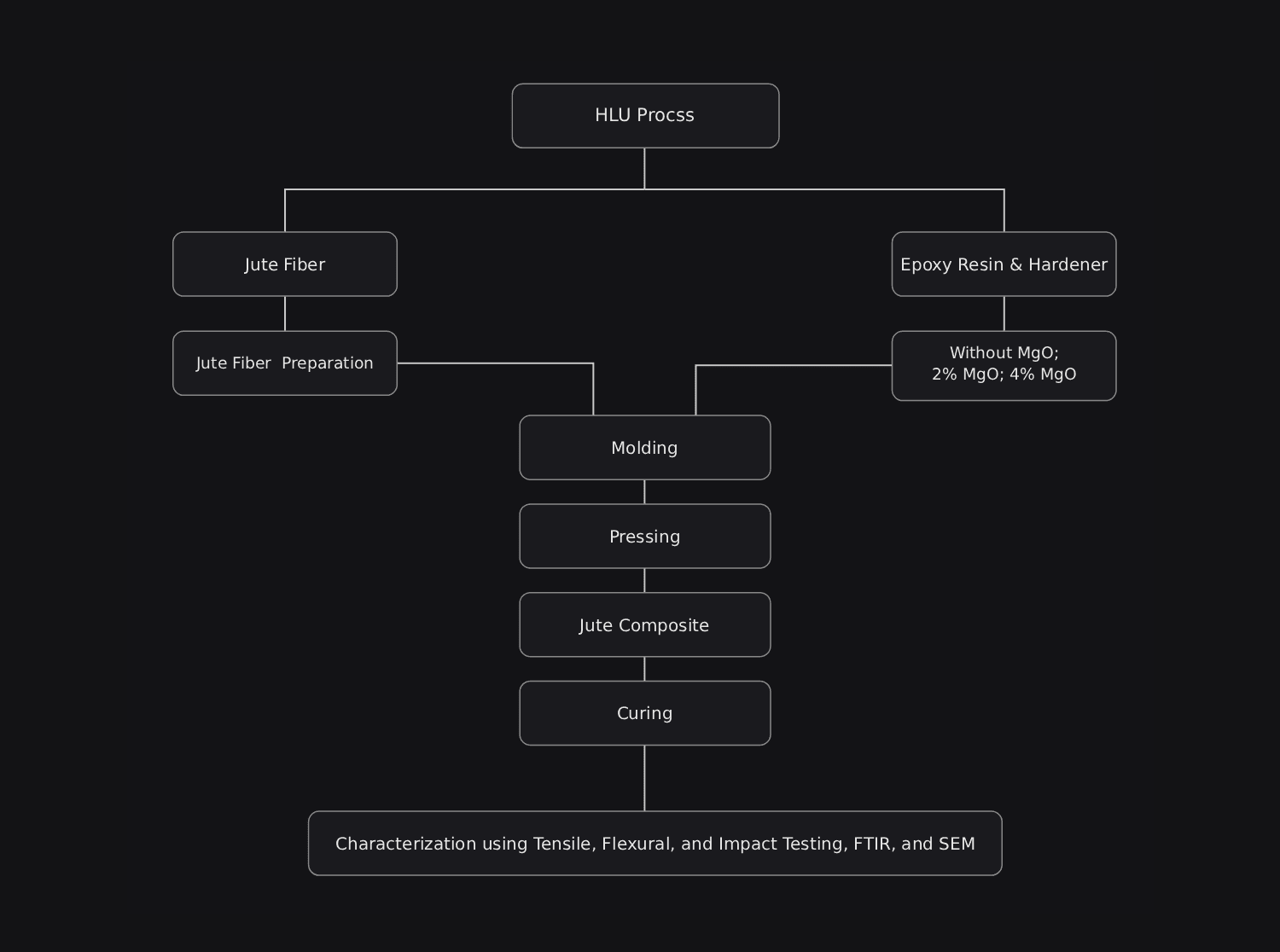
HLU process flowchart for MgO-modified jute epoxy bio-nanocomposite fabrication
Springer Nature

Effect of magnesium oxide on mechanical behavior of jute fiber reinforced epoxy bio-nanocomposite

How a small nanoparticle addition rebalances strength, ductility, and interfacial bonding in a waste-derived natural-fiber composite.


Composites were fabricated by hand lay-up from recycled jute fibers with 0, 2, and 4 wt% MgO nanoparticles, then characterized mechanically and chemically. The 2% MgO composite traded a modest drop in tensile strength (30.53 to 25.82 MPa) for markedly higher strain at failure, shifting behavior from brittle to ductile. FTIR peak shifts confirmed Mg–O–C bonding at the fiber-matrix interface, and SEM showed uniform dispersion at 2% but agglomeration and porosity at 4%, identifying an optimal loading threshold.

Venue

Scientific Reports (Springer Nature), 2025

Impact Factor & Quartiles

4.9; Q1

Skills & Tests

NanocompositeHLU ProcessTensileImpactFlexuralFTIRSEM
Naval replenishment-at-sea station alongside a support vessel at sea
FEA mesh rendering of the UNREP/RAS station structure
Springer Nature

Optimized Structural Design and Stability Validation of Naval UNREP/RAS Stations: A Finite Element and Stability Integration Study

How finite element analysis and algorithm-driven optimization cut structural weight without crossing the line into unsafe stress or unstable trim.


A naval replenishment-at-sea station was modeled in FEMAP and optimized through genetic algorithms, surrogate modeling, and perturbation load analysis, tuning plate thickness and stiffener arrangement across six load types and multiple testing and failure combinations. The optimization achieved roughly 10% structural weight reduction while peak von Mises stress reached 219.06 MPa, staying within the 220 MPa allowable limit for ASTM A-36 mild steel. Manual stability validation under SOLAS II-1 Regulation 5.4 confirmed the 19,246 kg installation raised lightship displacement by only 0.17%, with VCG and LCG shifts of 0.12% and 0.04%, well inside the 0.5% regulatory limits. The result is a regulation-compliant framework that removes the need for a re-inclination experiment.

Venue

Arabian Journal for Science and Engineering (Springer Nature), 2025

Impact Factor & Quartiles

3.1; Q1

Skills & Tests

FEAFEMAPSurrogate ModelingGenetic AlgorithmsAutoCADPerturbation Load AnalysisVon Mises StressSOLAS Compliance
Recycled denim fragments on a worn blue denim surface representing textile waste valorization
Elsevier

Effect of Untreated Jute Fiber Incorporation on the Properties of Recycled Denim–Epoxy Hybrid Composites

Turning textile waste into load-bearing composites — and reading the data honestly when the untreated interface underperforms.


Recycled denim-epoxy and untreated jute-denim hybrid epoxy composites were fabricated by hand lay-up and characterized mechanically, thermally, and morphologically. The recycled denim composite showed superior performance, achieving a tensile strength of 31.4 ± 0.2 MPa and an impact strength of 8.30 ± 0.39 kJ m⁻², whereas adding untreated jute reduced tensile strength to 25.2 ± 0.3 MPa (19.5%) and impact strength to 5.60 ± 0.30 kJ m⁻², indicating inefficient stress transfer. SEM revealed fiber pull-out and interfacial debonding, while TGA/DSC showed comparable thermal stability. Despite lower water absorption and porosity in the hybrid composite, untreated jute acted as a weak interfacial phase, highlighting the need for fiber surface treatment to improve sustainable hybrid composites.

Venue

Results in Engineering (ScienceDirect), 2026

Impact Factor & Quartiles

9.4; Q1

Skills & Tests

Textile waste valorizationTensileImpactFlexuralTGADSCSEM

Skills

Scientific and Technical Skills

  • UTM (Tensile Test, Flexural Test, compression Test)
  • Scanning Electron Microscope laterally with Energy Dispersive Spectrum (SEM-EDS)
  • X-ray Fluorescence Spectrometry (XRF)
  • X-ray Diffraction (XRD)
  • Raman Spectroscopy,
  • FTIR Spectroscopy
  • Ultraviolet (UV), Infrared (IR) Reflectography
  • TGA/DSC (Thermogravimetric Analysis and Differential Scanning Calorimetry)

Software Skills

  • Simulation & Analysis: Ansys
  • CAD & Engineering Tools: SolidWorks, AutoCAD
  • Programming & Data Analysis: Python, Jupyter, OriginPro, ImageJ
  • Design & Visualization: Adobe Photoshop, Illustrator, InDesign (professional experience, 2021)

Other Computer Skills & Competences

  • G-suite (Email, Calendar, Docs, Sheets, Slides, Drive, Meet, Forms)
  • Microsoft Office (Microsoft Team, Microsoft View, Microsoft Meeting)
  • PowerPoint
  • Notion
  • Trello
  • Internet tools
  • Application Software
  • Database Management System
  • Hardware troubleshooting etc.

Language Skills

English


IELTS Academic - Overall Score 7.5

Test Report Form Number: 26BD501904HOSR001A

Hindi & Urdu


Professional Working Proficiency

No official test report

Excellent|Novice LowNovice Low|Excellent

Japanese


JLPT (N5) - 99/180 (CEFR level-B)

Certification Number: N5A200459A

NAT Test (N5) - 114/180 (CEFR level-B)

Examination Number: 1835741094

Bangla


Native Speaker

No official test report

Excellent|ExcellentExcellent|Excellent

Extracurricular Activites

  • VolunteerBangladesh Red Crescent Society (2024–Present)
  • CaptainME Cricket Team, City University (Inter-Department Champions, 2023)
  • Executive MemberCity University Debating Club (2023–2024)
  • TreasurerApex Club of Dhaka City (2025–Present)

Feel free to reach out to me anytime. I'd love to connect about research collaboration, materials testing, or upcoming conferences.